For many families, planning a funeral is not simply about selecting a method of disposition. It is about (Consumer Advice) being faithful to personal values, family traditions, and concern for the natural world.
Green burial—sometimes called natural burial—offers an alternative to conventional burial practices. It emphasizes simplicity, biodegradable materials, minimal disturbance of the earth, and the body’s natural return to the soil.
Although green burial is becoming more widely available, families should understand both its benefits and its practical requirements. State and local laws, funeral-home procedures, and individual cemetery policies can all affect which options are available.
What Is Green Burial?
Green burial is a way of caring for the deceased that seeks to minimize environmental impact. The body is generally not embalmed with conventional chemical embalming fluids and is placed in a biodegradable casket, burial shroud, or another natural burial container.
A green burial commonly avoids metal caskets, concrete vaults, plastic materials, elaborate monuments, and maintenance practices that require extensive mowing, watering, or the use of pesticides or fertilizers.
The Green Burial Council describes green burial as an environmentally responsible approach that conserves natural resources, reduces carbon emissions, protects workers' health, and supports the restoration or preservation of natural habitats. The Green Burial Council does not require families to abandon meaningful funeral traditions. A visitation, memorial service, religious ceremony, graveside service, procession, or family gathering can still be included. The principal difference is in how the body is prepared, contained, and returned to the earth.
Environmental Benefits of Green Burial
Fewer Nonbiodegradable Materials
Conventional burial may include a metal or hardwood casket, synthetic fabrics, chemical finishes, and a concrete burial vault. Green burial replaces these materials with readily biodegradable alternatives, such as untreated wood, woven plant materials, natural-fiber shrouds, or quilted burial wraps.
The Green Burial Council considers a casket, urn, or shroud appropriate for green burial when it is made from nontoxic, readily biodegradable materials obtained without unnecessarily damaging natural habitats. (Green Burial Council)se of Embalming Chemicals
Green burial generally avoids conventional embalming. Instead, the body may be cared for through refrigeration, cooling, dry ice, natural body-care techniques, or burial within an appropriate period following death.
Avoiding conventional embalming reduces the use of chemicals and allows the body to return to the earth more naturally. It may also reduce chemical exposure for funeral-industry personnel.
Conservation of Natural Resources
Green burial uses fewer manufactured materials and generally requires less energy than the production and transportation of metal caskets, concrete vaults, elaborate monuments, and other conventional burial products.
Natural and conservation burial grounds may also protect open land, restore native plants, preserve wildlife habitat, and limit development. Conservation burial grounds provide the strongest land protections because they are established in cooperation with conservation organizations and typically include a conservation easement or deed restriction. (Green Burial Council) Natural Landscape
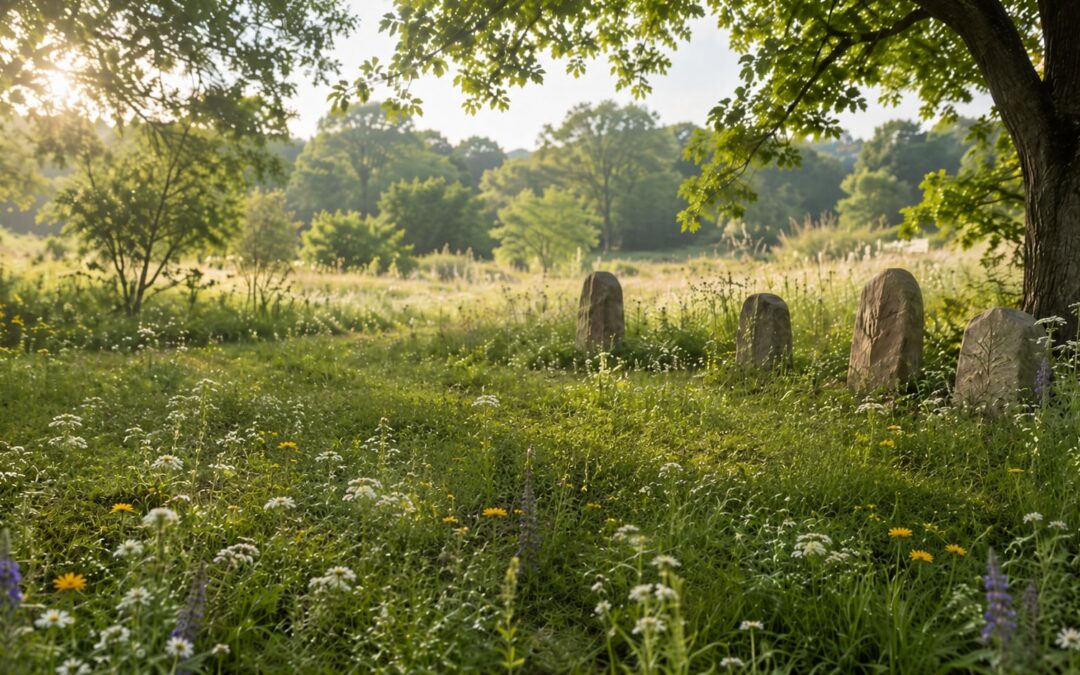
Green burial grounds often resemble meadows, woodlands, prairies, or other natural settings rather than highly manicured cemeteries. Native plants, naturally occurring stones, communal memorials, or discreet markers may be used instead of large monuments.
The exact appearance varies by cemetery. Some green sections within conventional cemeteries are regularly mowed, while dedicated natural burial grounds may be maintained in a more natural state.
Personal and Family Benefits
A Simpler and More Personal Farewell
Many families appreciate the simplicity of green burial. A natural-fiber burial shroud or a quilted burial wrap can provide a gentle, dignified presentation without the formality of a conventional casket.
The burial may feel more personal because the materials, ceremony, and setting can reflect the deceased person's character and values.
Greater Family Participation
Depending on cemetery policy, family members may be permitted to help carry the deceased, lower the burial container, place flowers or greenery in the grave, fill the grave, or participate in other aspects of the burial.
These acts can provide a meaningful opportunity to say goodbye. The Green Burial Council identifies increased family, community, and cultural participation as one of green burial’s potential benefits (Green Burial Council). Lower Costs
Green burial can reduce expenses by eliminating embalming, a conventional casket, a concrete vault, or an elaborate monument. However, green burial is not automatically inexpensive.
The cost depends on the cemetery, grave-opening charges, transportation, funeral-home services, the selected burial product, and whether the burial ground includes conservation-related fees. Families should request itemized pricing and compare the total cost of each option.
Is Green Burial Legal?
Green burial is generally permitted in the United States, but the requirements for the care, transportation, documentation, and burial of a body vary by state and locality.
A green burial still requires the same essential legal documentation as any other burial. This typically includes completing the death certificate, obtaining authorization for final disposition, arranging transportation, and complying with local burial and cemetery regulations.
Families should not assume that a requested practice is required or prohibited without consulting the applicable law or written cemetery policy.
Is Embalming Required?
No state requires routine embalming after every death. Some states may require embalming or refrigeration if burial or cremation does not occur within a specified period. In most cases, refrigeration is an acceptable alternative.
The Federal Trade Commission’s Funeral Rule prohibits funeral providers from falsely claiming that embalming is legally required. Funeral homes must also disclose that embalming is not required by law except in certain special circumstances. A particular funeral arrangement, such as an extended public viewing, may nevertheless make embalming a practical requirement under the funeral home’s stated policies. (Consumer Advice) For a green burial, timing and body-care options should be discussed with the funeral director as early as possible.
Is a Casket Required?
Families may opt for a biodegradable casket, a natural-fiber shroud, or a burial wrap instead of a conventional metal or hardwood casket. However, acceptance of a shroud-only burial often depends on the cemetery’s operating rules and procedures for transporting and lowering the deceased.
When a casket is purchased from another seller, the FTC Funeral Rule generally prohibits a funeral home from refusing to handle it or from charging an additional casket-handling fee. (Consumer Advice) The Funeral Rule does not govern every cemetery in the same way it governs funeral providers. Families should separately confirm the cemetery’s requirements before purchasing a burial container. (Federal Trade Commission) Vaults Required?
An outer burial container—commonly called a vault or grave liner—is not required by state law anywhere in the United States. Nevertheless, many conventional cemeteries require one to reduce ground settling and make lawn maintenance easier. (Consumer Advice) A requirement for a complete concrete vault may not be compatible with a fully natural burial. Some cemeteries, however, permit an inverted vault, a partial liner, a biodegradable support system, or burial without any outer container in a designated green section.
A Green Burial Council-certified hybrid cemetery must offer green burial without requiring a vault and permit appropriate biodegradable burial containers, including shrouds and softwood caskets. (Green Burial Council)ing Cemetery Compatibility
Not every cemetery that describes a service as “green” adheres to the same standards. Before making arrangements, families should determine which type of cemetery or burial section is being offered.
Hybrid Cemetery
A hybrid cemetery is a conventional cemetery that offers green burial either throughout the cemetery or in a designated section. Its green section may allow biodegradable caskets and shrouds without requiring a burial vault.
This option can make green burial available closer to home and may allow family members who choose different burial practices to be buried in the same cemetery.
Natural Burial Ground
A natural burial ground is dedicated to environmentally responsible burial practices. It typically prohibits conventional embalming chemicals, nonbiodegradable burial containers, concrete vaults, and markers made from inappropriate or non-native materials.
The landscape is typically managed to conserve resources and minimize damage to soil, plants, and wildlife.
Conservation Burial Ground
A conservation burial ground combines natural burial with permanent land protection. It is typically operated in partnership with a recognized conservation organization and adheres to a conservation management plan.
This option allows burial fees to contribute not only to cemetery operations but also to the long-term preservation or restoration of the land. (Green Burial Council) to Ask the Cemetery
Before purchasing a plot or burial product, request the cemetery’s green-burial policies in writing.
Confirm whether the cemetery permits burial in a shroud or a quilted burial wrap without a rigid casket. Ask whether a lowering board, carrier, tray, or other support device is required. Determine whether the device must remain in the grave or may be removed after the body is lowered.
Ask whether a vault, grave liner, concrete slab, or another outer burial container is required. Clarify which biodegradable materials are permitted and whether the cemetery must approve the burial product in advance.
Families should also ask about grave depth, grave-opening and closing charges, family participation, flowers and personal objects, memorial markers, native plantings, long-term grounds maintenance, and any additional fees for the green-burial section.
When purchasing a plot in advance, ensure the contract clearly identifies the grave or section as suitable for the desired type of green burial. Verbal assurances should be confirmed in writing.
Planning Ahead Is Important
Green burial is easiest to arrange when decisions are made before an immediate need arises. Planning ahead gives families time to compare cemeteries, find an accommodating funeral provider, review burial products, understand costs, and document personal wishes.
Written instructions should specify the preferred cemetery, funeral home, type of body care, burial container, ceremony, and alternate arrangements if the first choice is unavailable.
Preplanning is especially important when using a burial shroud or a quilted burial wrap. The cemetery and funeral provider should confirm that they can safely transport, carry, lower, and inter the deceased with the selected product.
A Meaningful Return to the Earth
Green burial offers families a way to honor a loved one with simplicity, dignity, and environmental responsibility. It can reduce the use of chemicals and manufactured materials, encourage family participation, and help preserve natural landscapes.
The most important step is to verify the details. What is legally permissible may still be affected by a cemetery’s rules, and practices vary considerably from one provider to another.
By asking questions, requesting written policies, and planning ahead, families can create a farewell that honors both the person who has died and the earth to which they return.
This article provides general educational information and is not legal advice. Burial, transportation, cemetery, and private-property requirements vary by state and locality. Families should confirm current requirements with the appropriate funeral provider, cemetery, state regulatory agency, and local authorities.